ThirdEye
A new brand system for an evolving identity
Overview
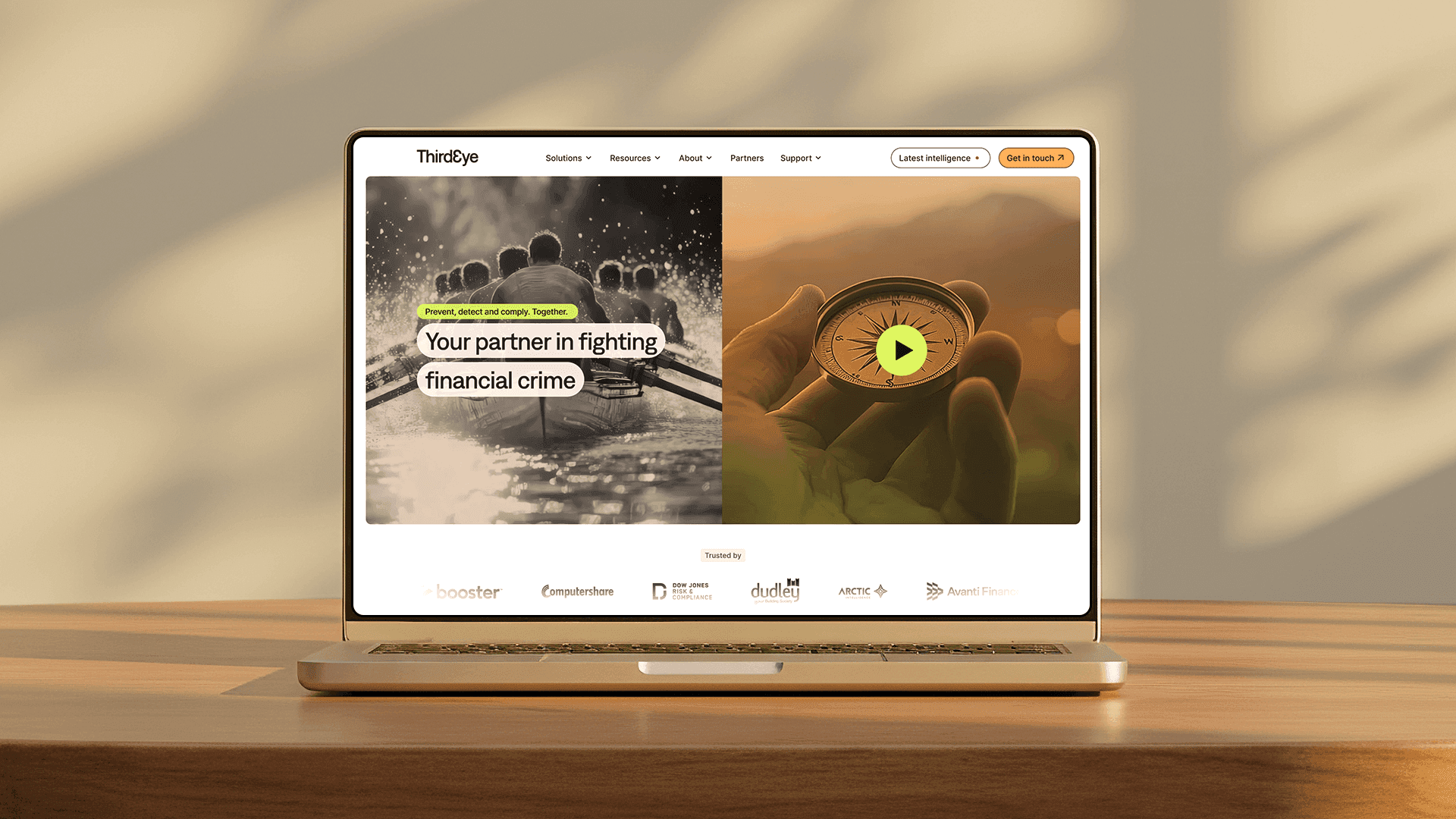
ThirdEye is an AML SaaS product helping financial organisations prevent financial crime and meet regulatory compliance across New Zealand, Australia and the UK.
As the product grew, it needed to stand out in a crowded, feature-led market. Internally, a small design team supporting global marketing needs created bottlenecks, slowing production and driving a reactive workflow.
Brought in as a contractor over six months, I led the development and delivery of the new brand, working alongside an external agency, Marketing, Product and the Delivery Lead. My focus was to translate the new brand strategy into a scalable brand system, which empowered teams with the tools and knowledge to work independently, and strengthened ThirdEye’s position in the market.
Deliverables
Comprehensive brand guidelines.
01
Centralised Figma resource library.
02
Wordpress website design and delivery [100+ pages].
03
Sub-brand identities and supporting assets.
04
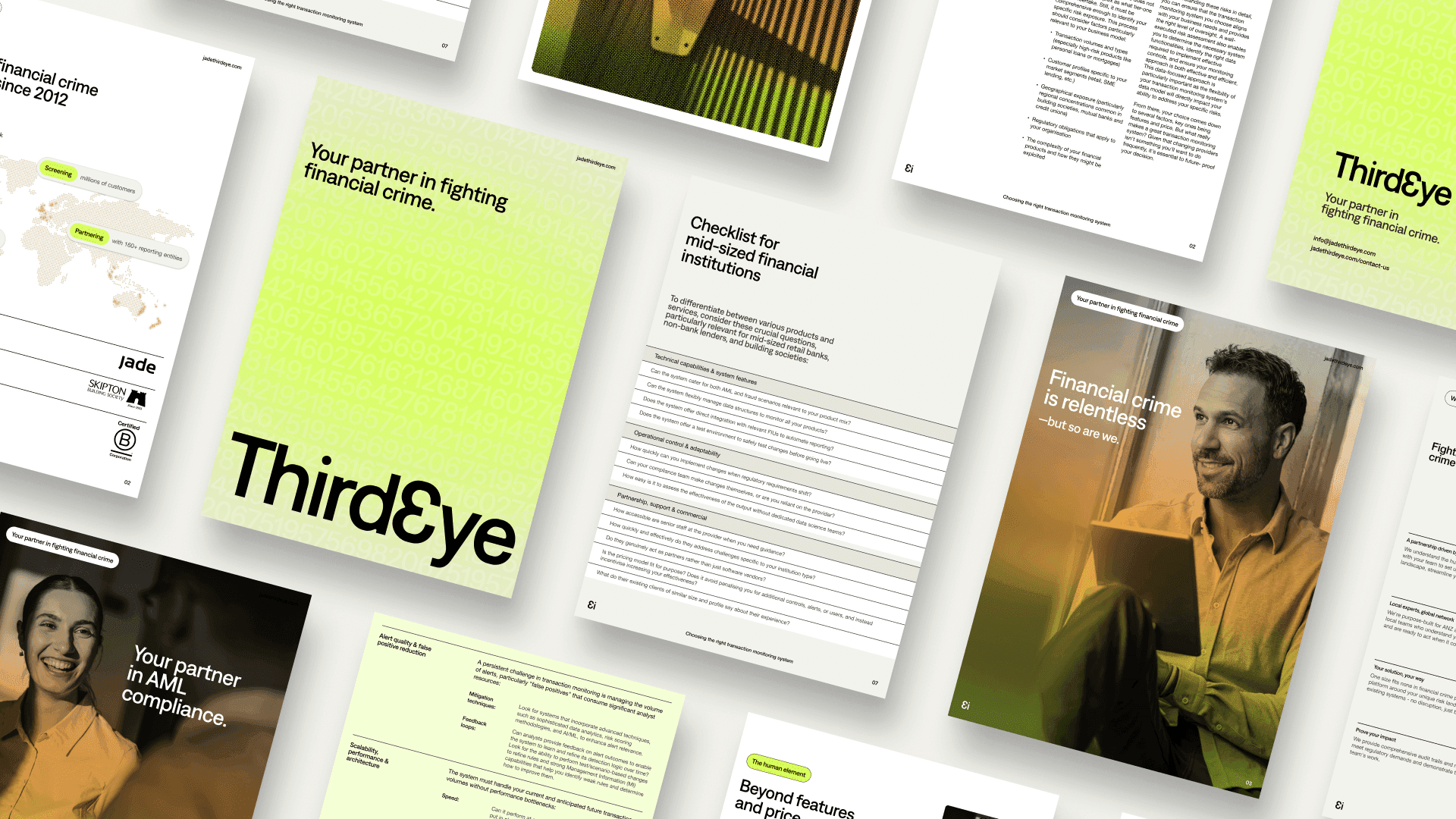
Extensive templates for social, presentations & documentation.
05
Riverside video and podcast templates.
06
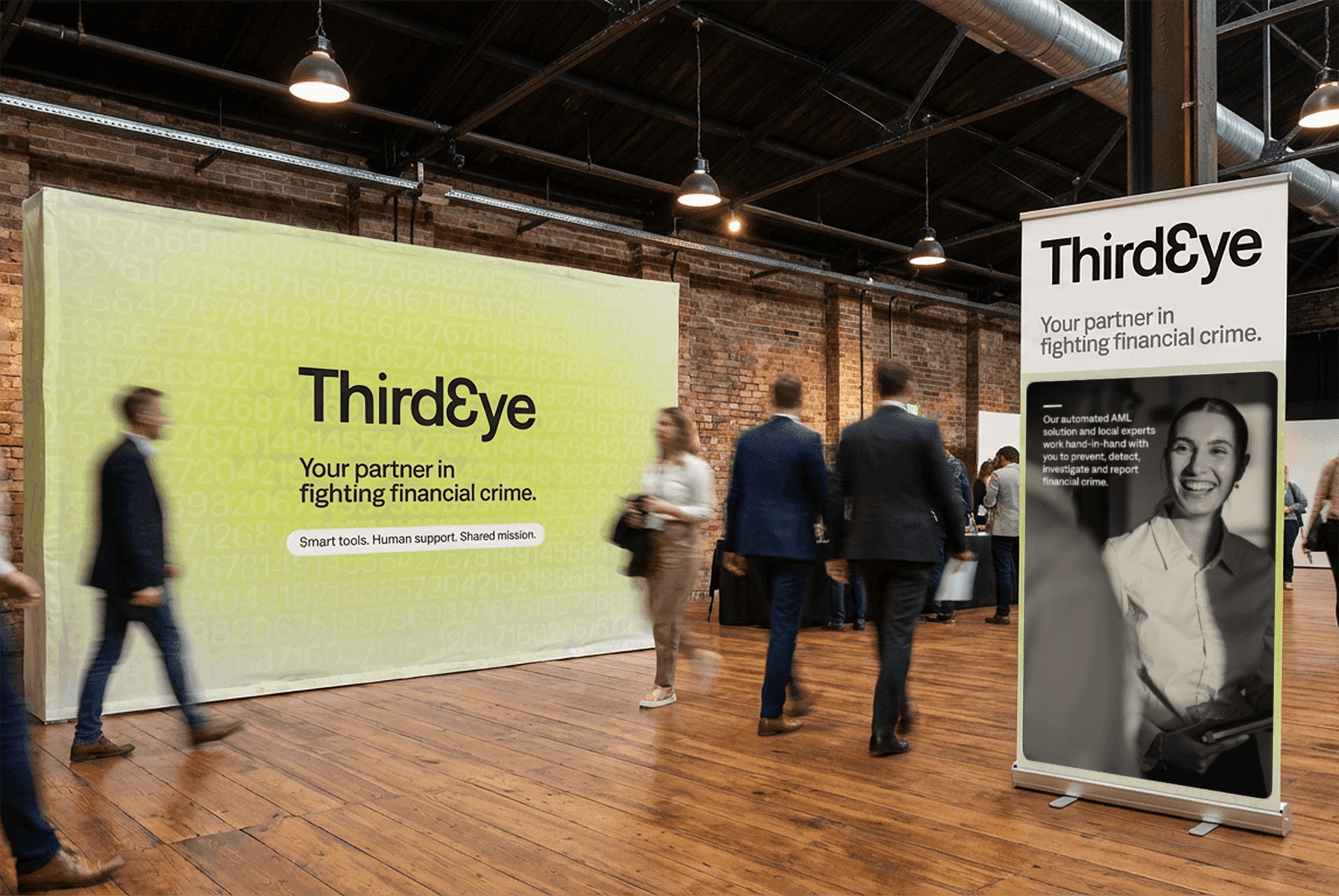
Event booth design, merchandise and print collateral.
07
01
Problem
Like many SaaS products, ThirdEye was a feature-led RegTech brand with little distinction in a saturated market.
Working with an external agency, ThirdEye was repositioned as a more human-first brand, highlighting the people and teams behind the product who help customers achieve compliance. A new brand identity was developed, defined by bold, human colours, imagery and animation to help bring this story to life.
Internally, the business faced another challenge. Three global marketing teams were supported by a single designer. Teams needed the pace and flexibility to scale the product, but the systems weren’t in place to support them.
There had been rebrands before, but the difference this time was building the systems behind the brand. The goal was to empower teams to work without friction, with the confidence and resources to understand and apply the brand consistently.
02
Design decisions
Overview
Initially, existing workflows and tools were audited to understand where the biggest bottlenecks were and what teams actually needed.
Centralised brand resources
We centralised brand resources in Figma, establishing interactive brand guidelines that could be easily updated by the design team as the brand grew, and it could easily be shared to the business and external partners, while the design team had access to make global updates as the brand grew.
Scalable templates and tools
Over 50 templates were created using Figma Buzz, covering social posts, documentation and presentations. These gave teams access to ready-to-use resources while maintaining control over what could be edited, helping protect brand quality and consistency. For podcasts and video, I created Riverside.io templates, setting up the brand directly within the platform and providing training on video editing. This allowed Marketing to produce recurring content without relying on a designer, while a two-step approval process ensured Design could review and sign off on Marketing-created content before going live. Together, these changes reduced design BAU by more than 60% and increased go-live time.
Training and feedback
Following rollout, open business drop-in sessions were created to provide training, gather feedback and understand any additional needs. This allowed us to refine the resources based on how teams were actually using them and ensure the new approach was effectively adopted by the wider business.
03
Outcome
One year on, the brand remains consistent and a standout within the market which is the biggest indicator the system has been successfully adopted.
Design bottlenecks have been significantly reduced, freeing up time to focus on other brand initiatives rather than constantly reacting to day-to-day requests.
Marketing now has the tools and confidence to produce content at pace, while maintaining the quality and consistency of the brand across the business.
